
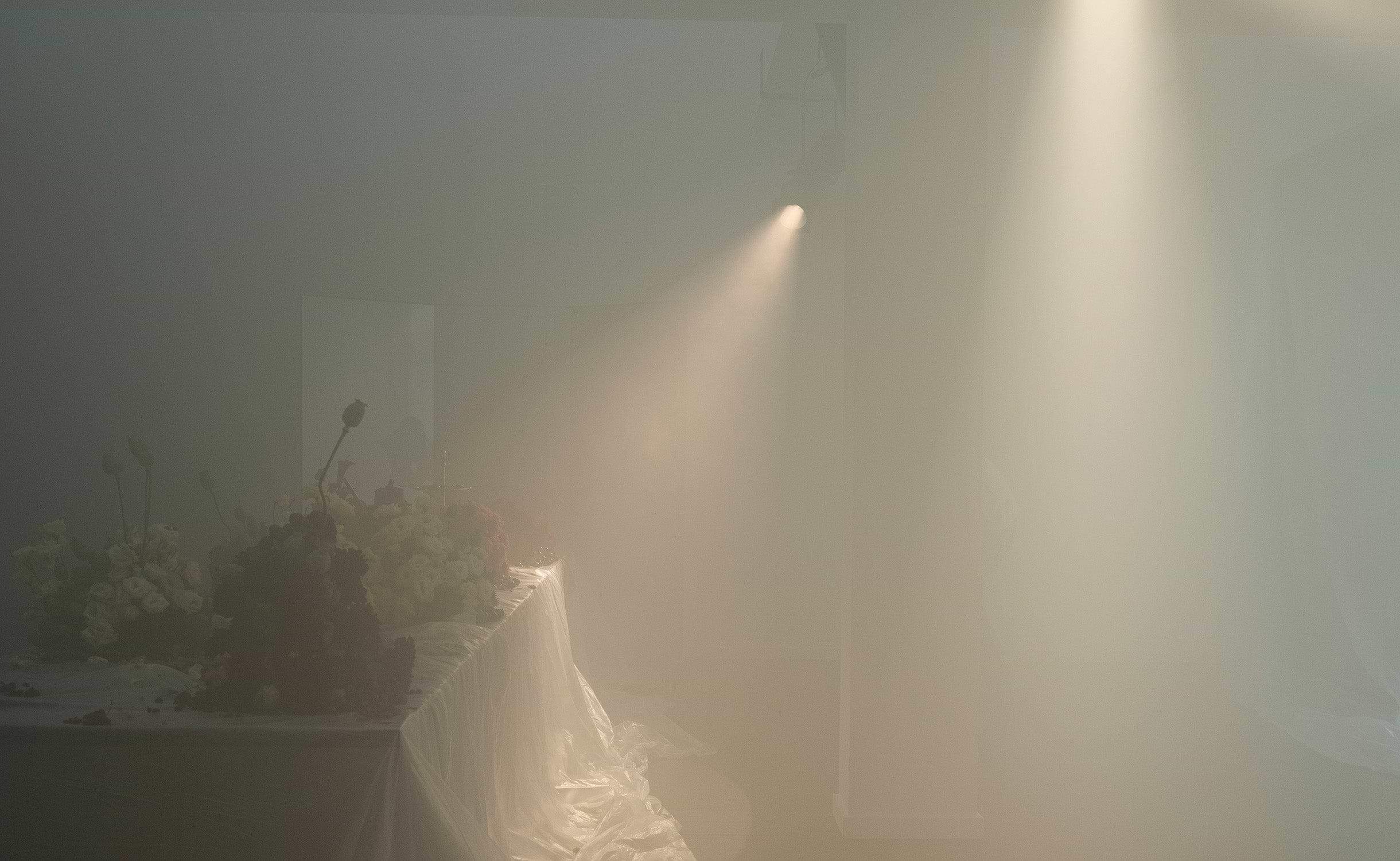
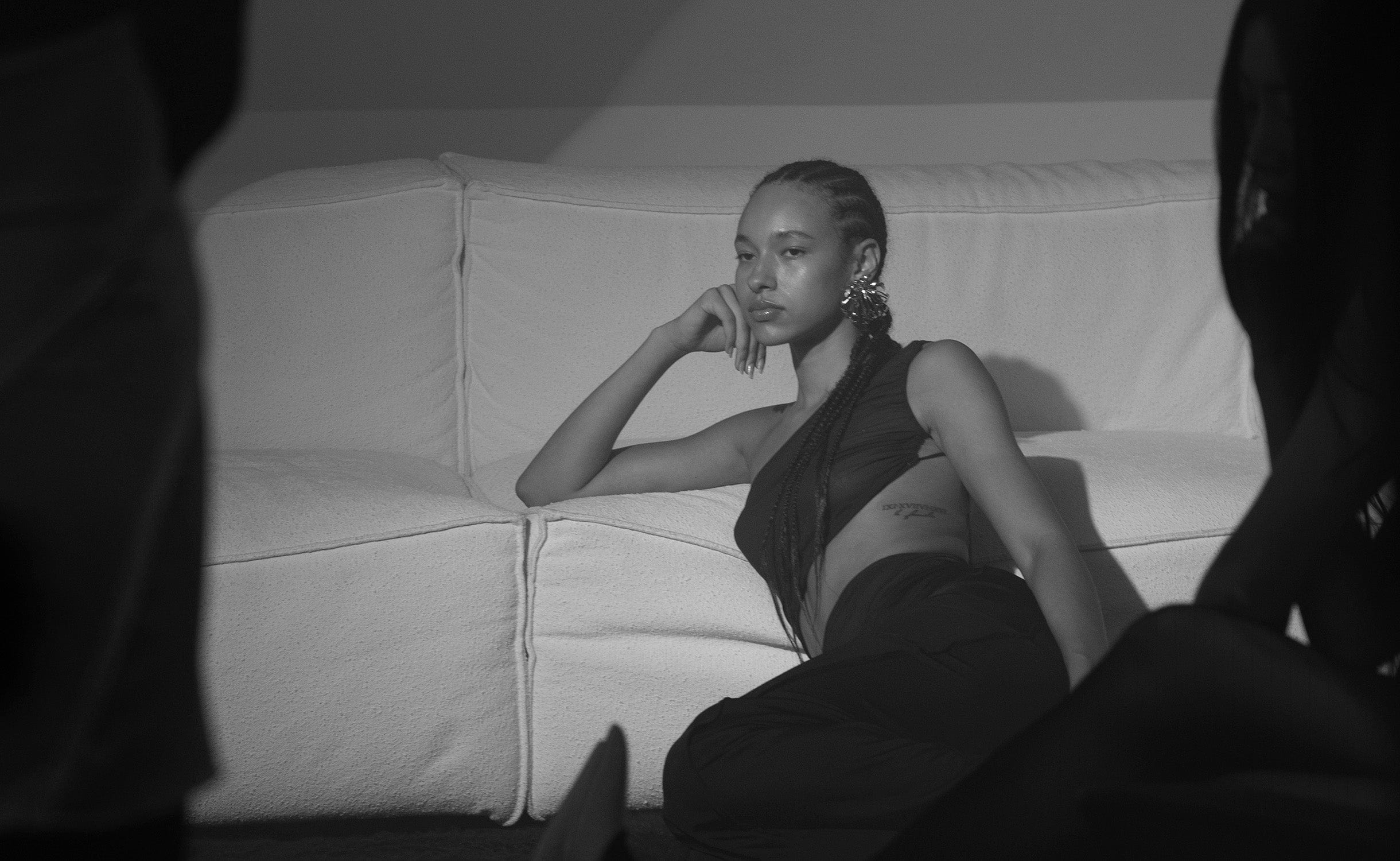
Not everything reveals itself at first glance. That idea sat at the heart of A Salon, Johannes Boehl Cronau's intimate presentation during Berlin Fashion Week. Stepping away from the traditional runway and the relentless rhythm of seasonal collections, the ioannes founder invited guests into his Berlin apartment and studio instead: the place where his collections are conceived, lived with and continually reworked. Models moved almost imperceptibly through rooms layered with lacquered furniture, collected design objects, towering arrangements of fruit and flowers, and a soft haze that dissolved the boundary between installation and everyday life.
It made perfect sense that the atmosphere was scented with Escentric 01.
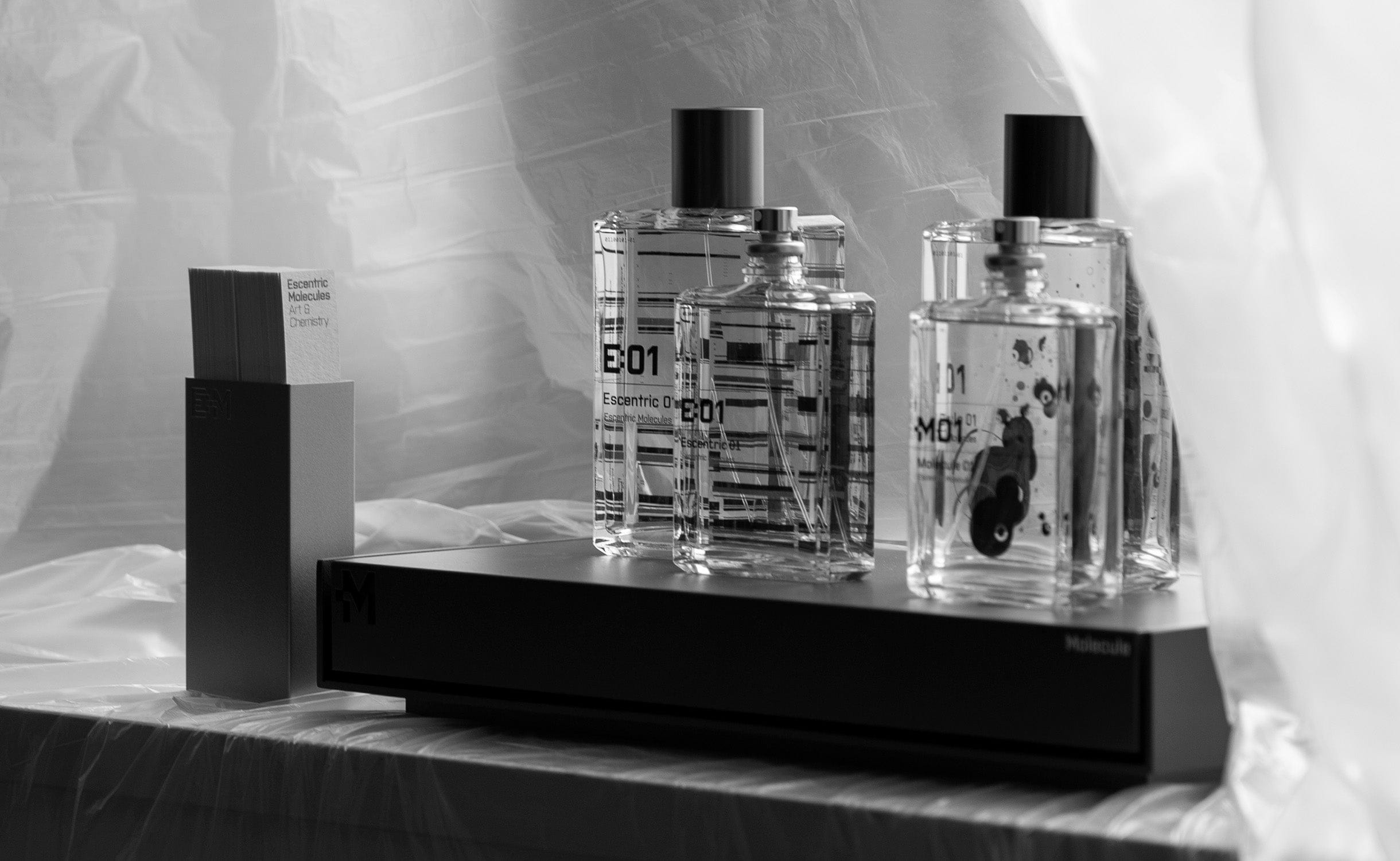
For over two decades, Escentric Molecules has challenged perfumery's conventions in much the same way ioannes is now questioning the fashion system. Both are independent houses shaped between London and Berlin. Both began with a singular idea and stripped everything back to it. While Johannes Boehl Cronau is choosing a slower, more deliberate way of showing clothes, Escentric Molecules has always resisted fragrance as performance, building scents around aroma-molecules that become meaningful only through the person wearing them. Neither is interested in chasing novelty. Both believe individuality emerges when you remove what is unnecessary.
That philosophy extended naturally into A Salon. Escentric 01 drifted through the rooms before the clothes came into focus, scenting both the space and the models as an invisible architecture. Like the garments themselves, it didn't demand attention. It altered the atmosphere first. As Johannes puts it in our conversation: "The moment you fill a space with fragrance, you commit to a total experience. It's the element that gives the atmosphere physical form."
We caught up with Johannes after the show to speak about building experiences rather than shows, why Escentric 01 became the invisible centre of A Salon, and what happens when you stop designing for visibility and start designing for feeling.
Scenting A Salon with Escentric 01
Why was scent an essential part of A Salon?
A fashion show gives you sight and sound. I wanted a room you could feel completely, in every sense. The event was always conceived as a total sensory experience. Not a show you watch, but a room you inhabit. Scent completes a room in a way nothing else does. The moment you decide to fill a space with fragrance, you commit to a total experience. It's the element that gives the atmosphere physical form.
Why did Escentric 01 feel like the right fragrance for A Salon?
The delayed reveal. The sharp pink pepper note at first and then the incense and citrus notes. It works on you before you understand it. That's exactly what I wanted in the room: something you register before you name it.
What was your first impression of Escentric 01?
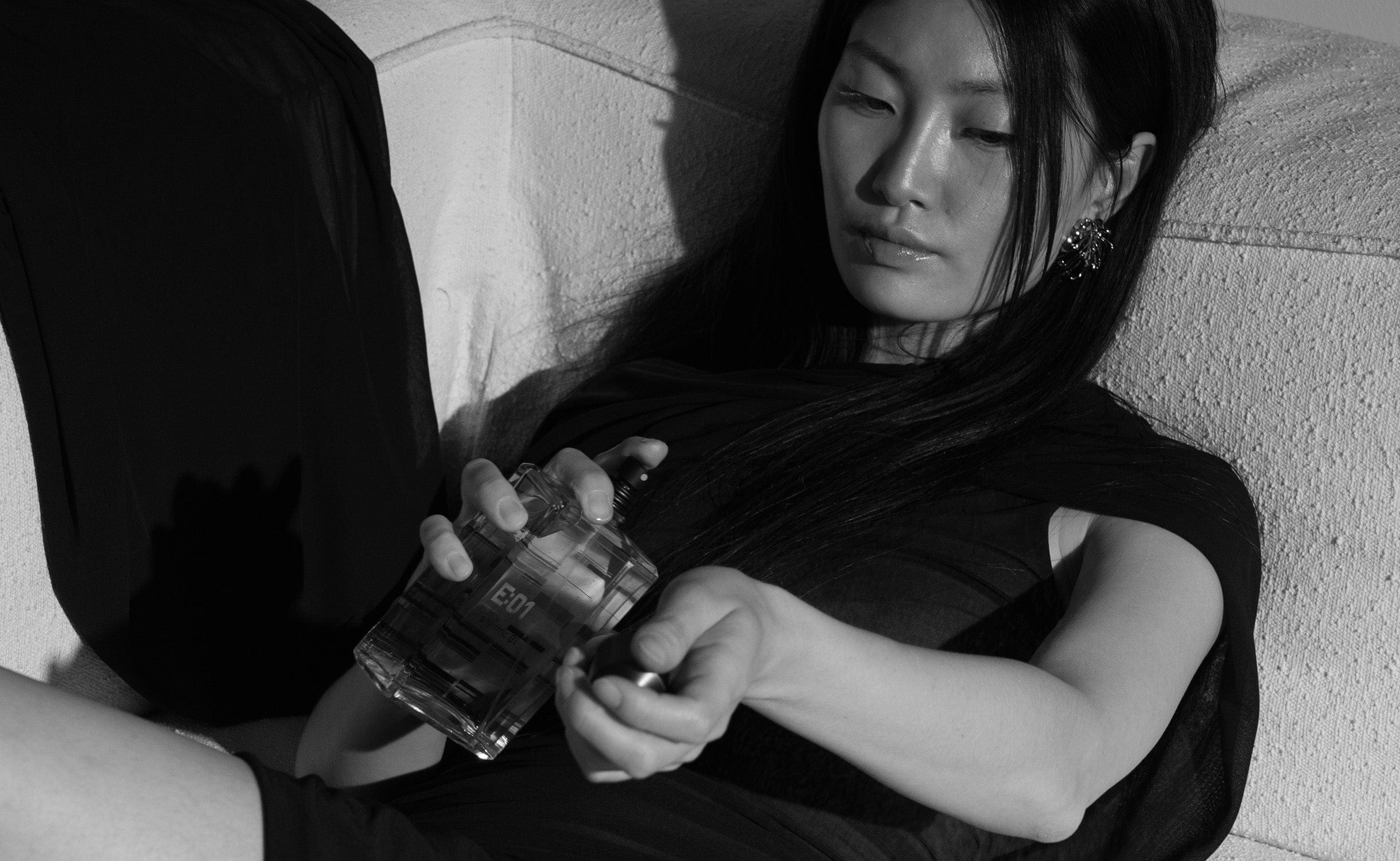
I live next to the best perfume store in the world on Rosa-Luxemburg-Strasse in Berlin, and have tried the whole range. Escentric 01 was the one I kept coming back to. Not because it was immediately the most impressive, but because it kept changing. An hour later it was different on my skin than when I first applied it. That stayed with me.
Escentric 01, Individuality & Design
Escentric 01 is known for revealing itself differently on everyone who wears it. Does that idea resonate with the way you design?
Completely. I'm not designing for a type. I'm designing for a person, and what that means changes entirely depending on who is wearing it. The garment is a starting point. The body completes it. Escentric 01 works the same way. The molecule works differently for everyone.
Escentric 01 has an understated presence that people often notice without immediately recognising. Does that quiet confidence reflect your approach to design?
That's exactly the register I design for. Not the woman who needs to be noticed. The woman who is noticed. The difference is everything.
What are the similarities between your work and Escentric Molecules?
Independent. Precise. Not interested in performing for a system.
If Escentric 01 were a piece from your collection, what would it look like?
Bias cut. Something that moves with the body rather than against it. Pale, off-white or barely grey. A slit somewhere unexpected. Looks minimal on the hanger. On the body – magnetic.
Designing the Unseen Through Scent & Space
Which is more powerful: something people see, or something they feel without consciously noticing?
What they feel without noticing. Sight makes people critical. The invisible makes them stay.
What role does the unseen play in your creative process?
It's the starting point. I know a collection is working when I can't yet fully articulate what it is. The moment it becomes fully legible to me, the energy has usually already passed.
You're meticulous about every visual detail. How important is the invisible layer of an experience?
More important than the visible. You can design a perfect room: light, proportion, colour and it will still feel like nothing. The thing that makes a space feel alive is usually the thing you can't point to, that is specific to how a space is actually used, not staged.
Do you think scent can tell a story without words?
Scent is the only thing that can. Words translate. Images represent. Scent just arrives.
What did you want fragrance to do that clothing couldn't?
I wanted it to be perceived before the clothing could be seen. When you walk in, you encounter the scent in the air, on the models, before you've formed a single conscious opinion about what you're looking at. It prepares you. And then the clothes arrive.
Why was it important to invite people into your home rather than a traditional show space?
Because the work was made here. It didn't feel honest to move it somewhere else to be seen. The apartment, the furniture, the objects – they're part of the same visual thinking as the clothes. Everything belongs to the same person, who makes the same decisions.
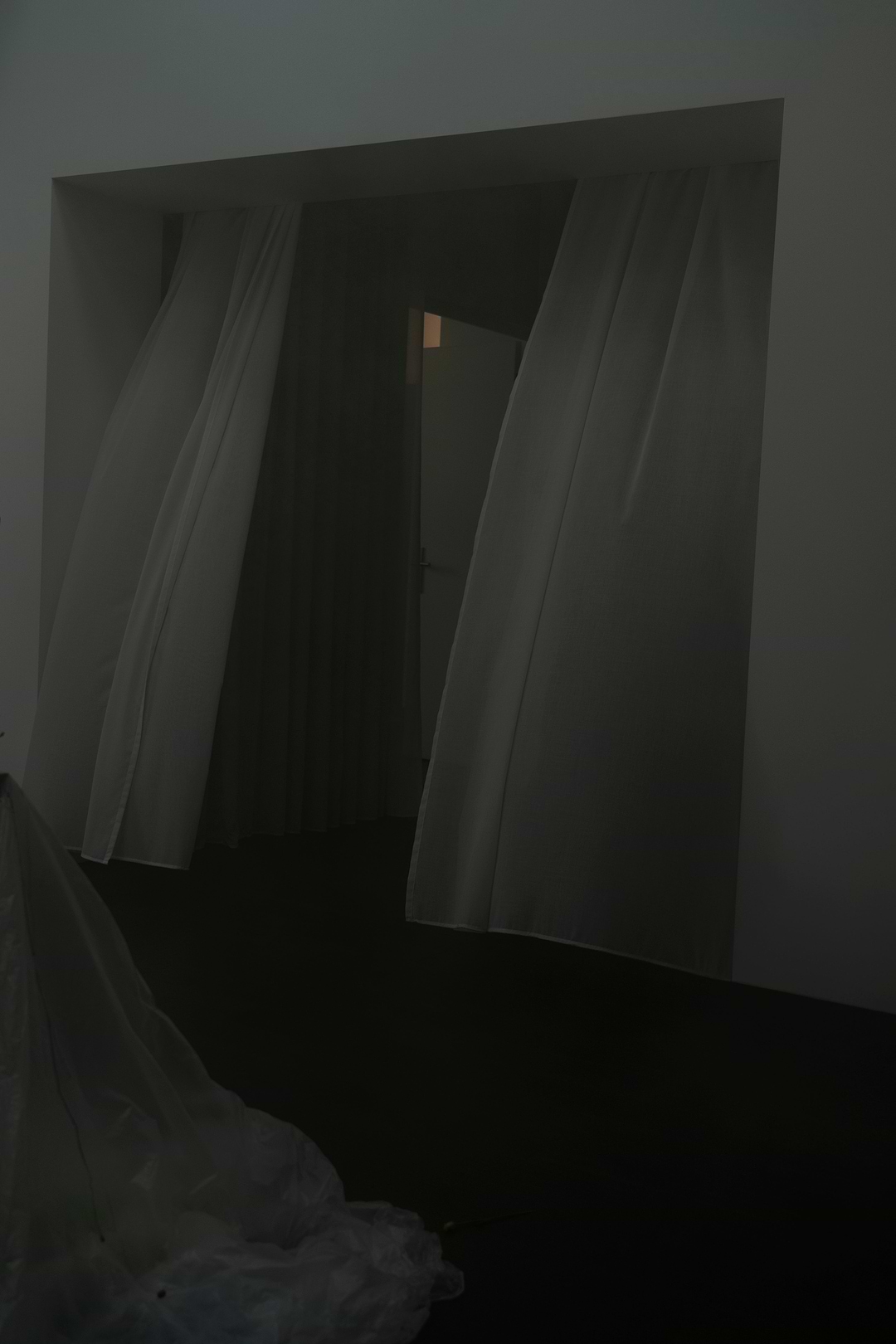
Your clothes don't just exist in the space; they seem to belong to it. Do you design environments alongside garments?
Always. I live in my studio; they're the same space. Every collection has been made in the same space where I eat and sleep, and I think that shows in how the clothes move. They're not designed for a stage. They're designed for a life.
Can a fragrance become part of the architecture of a room?
Escentric 01 did here. The hazer moved it through the space the way light moves through a room, everywhere and nowhere specific. That's architecture.
How do you think scent changes the way people experience a space?
It changes the speed at which people move through it. When a space smells right, people slow down. They don't know why. That's what I wanted.
At what point in creating A Salon did you begin thinking about scent?
Very early. When Escentric Molecules came to us, the alignment was immediate. Two independent houses with the same instinct: remove what doesn't serve. What's left should feel inevitable.
Was there a particular emotion you wanted the fragrance to evoke?
The moment after the party when you're still a little drunk, and the room is warm, and something very good is about to happen or has just happened, and you're not sure which.
How do you know when the atmosphere of a space feels complete?
When you stop noticing the individual elements and the space just becomes one thing.
Why did you choose to revisit pieces from previous collections rather than present something entirely new?
There's a stubbornness in how I return to certain themes. And there's honesty in deciding not to pretend the old work doesn't exist. These pieces weren't finished the way I might have liked them to be; they were interrupted by the rhythm of a system I no longer wanted to operate within. A Salon gave me the chance to bring them back. Not as archive. As now.
Describe your work in three words.
Tension. Pleasure. Depth.
Berlin, Fragrance & Sensory Memory
A smell that reminds you of Berlin?
Concrete and elderflower in summer heat.
The smell of your studio?
Old wood. Fabric. Tuberose. Something slightly floral.
The smell that makes you feel most creative?
The moment before a rainstorm. And wood. I grew up in a carpentry workshop, so always wood.


